Loading saved preview data.

Your next payment relationship.Your path to greater independence.

Find a suitable payment partnership now, or prepare to move beyond a single provider.

An introduction is not approval. No Stripe password.

Payouts

Paused

Charges

Limited

Reserve

Held

Illustration. No password. Freeze not lifted.

What brings you to RevRouters?

Three different requests. Pick the one that matches you. The form asks only for that path.

I need processing

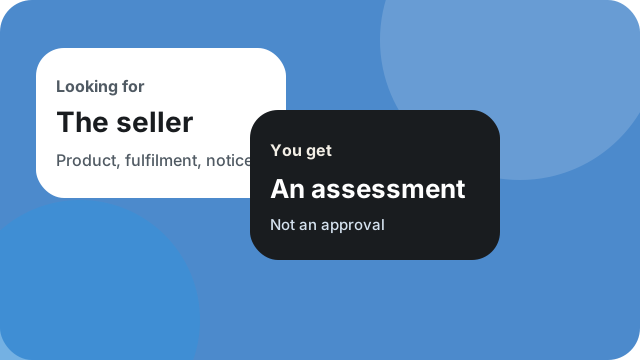
We are looking for

What you sell, how orders are fulfilled, and any freeze, restriction or closure.

You get

A merchant assessment. We say if a partnership can even be discussed.

Not an approval. Not a freeze lifted. No Stripe password.

Start my merchant assessment
I already have an account

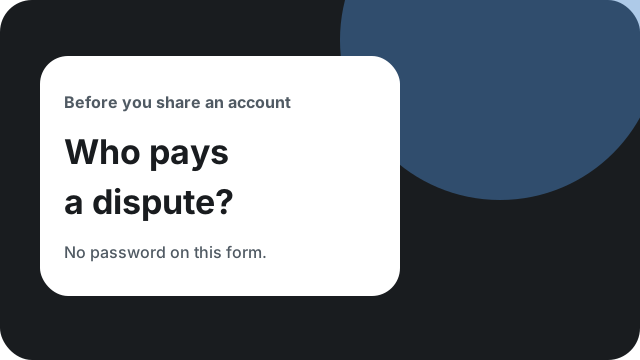
We are looking for

Whose sales, what access, how settlement works, and who pays a dispute.

You get

The partner requirements, before you share anything.

An active account is not permission. No password on the form.

Review what I would take on

I want off one provider

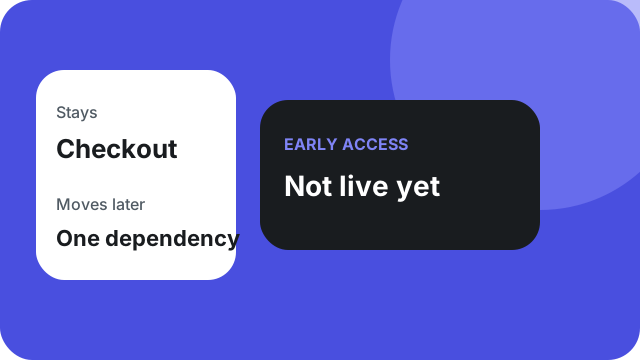
We are looking for

Which dependency you want to move, and what must stay.

You get

Early access to Control. A plan, not a switch.

Not a live migration. Not another Stripe login.

Request Control early access

Two services

Start with the relationship. Build towards more control.

RevRouters Match

The right relationship starts with the right information.

We assess the business, review whether a partnership could be suitable, and coordinate an introduction only where the arrangement can proceed. Terms, access, settlement and responsibilities are named before anyone commits.

  • Structured business assessment.
  • Suitability-led introductions.
  • Permission and evidence review.
  • Commercial terms and onboarding coordination.
I need processing — start assessment

RevRouters Control

Keep the customer experience. Change what powers it.

Prepare alternatives and move supported payment capabilities on your terms. Less rebuilding, clearer ownership, fewer unnecessary customer actions. Control is not a live switch in this preview.

  • Payment-dependency mapping.
  • Alternative-provider readiness.
  • A defined transition plan.
  • Supported migration and reconciliation, when built.
I want off one provider — request early access

A partnership may continue to use Stripe. Reducing Stripe dependency needs a separately supported alternative. Using someone else’s Stripe account is not independence, and it is not offered here.

A match is the beginning — not the whole decision.

Understand the business

Know the merchant, what it sells and how orders are fulfilled.

Understand the economics

Review how any compensation would be calculated. No rate is assumed.

Understand the responsibilities

Name who handles settlement, refunds, disputes, losses and the customer.

Establish the permissions

Confirm permission for the actual arrangement — not merely that an account is active.

I need processing — start assessment

Looking for the seller, the product, fulfilment, and any notice. This does not approve a partnership.

Consider the opportunity. See the full picture.

A partnership should make sense beyond a headline share of revenue. Review the business, the terms and the responsibilities before you move.

  • Whose sales would be processed.
  • Which products and websites are involved.
  • What access would be requested.
  • How settlement would work.
  • How compensation would be calculated.
  • Who carries refund, dispute and loss responsibilities.
  • What permissions and agreements are required.
  • How the relationship can end.
I have the account — review requirements

Looking for whose sales, what access, and who pays a loss. An active account is not eligibility. Do not share a password.

Before you commit

Named. Permitted. Written.

Settlement, refunds, disputes and exit have owners. If they do not, the relationship is not ready.

Processing disrupted? Start with a clear assessment.

Tell us what happened, what you sell and what you need next. The path might be a proposed partnership, preparation for another provider, or a stop until the facts are complete. It is not assumed that every merchant needs the same answer.

Processing stopped — start a merchant assessment

Looking for what happened, what you sell, and the notice. Previous restrictions must be disclosed. This form does not switch a frozen account back on.

Move one dependency — or plan the bigger transition.

Start with visibility

Identify where checkout, customer records, billing and reporting depend on the current provider.

Prepare a usable alternative

Establish eligibility and supported capabilities before anything is switched.

Choose the scope

New orders, a customer cohort, or a broader forward change — defined before execution.

Validate the result

Check outcomes against the agreed scope. A universal invisible migration is not offered.

I want a planned transition — request early access

Some credentials and historical obligations need separate handling. No fully invisible migration is promised. Control is request-access until it is built.

A clear next step. Not another leap of faith.

  1. 01 — Tell us what you need

    Partnership matching, partner participation, or payment independence.

  2. 02 — Establish the facts

    The business, and the processing history the assessment actually needs.

  3. 03 — Review a defined path

    The relationship or transition, the permissions, the terms, and what is still open.

  4. 04 — Proceed when ready

    Only when the relevant requirements are satisfied. You should know who is responsible.

More than an introduction. More than a routing rule.

Relationship and infrastructure

Start with a commercial need. Keep a path towards provider choice later.

Decisions you can understand

See what is proposed, why it may fit, and what is still unresolved.

Change at a defined scope

Move supported responsibilities deliberately. Not uncontrolled switching.

Continuity without concealment

Keep the customer experience where possible without hiding the seller or the structure.

Questions, answered plainly

Is RevRouters a payment processor?

No. RevRouters provides assessment, introductions and, where it is later available, transition support. The payment provider processes under its own arrangements. This site does not claim to be a processor, a facilitator or a merchant of record.

What is the difference between Match and Control?

Match assesses a possible commercial payment partnership and coordinates an introduction only if the arrangement can proceed. Control is the longer path: less dependency on one provider, through supported connections and a planned transition. Control is early access. It is not a live migration.

Does a payment partnership replace Stripe?

Not necessarily. A partnership may still use Stripe. It is not an alternative processor unless the provider actually changes. Using another business’s Stripe account is not a replacement, and it is not offered.

Can I request an assessment after a Stripe suspension?

Yes. Provide the notice, the business and the relevant history. An application does not establish eligibility and does not guarantee an arrangement. It does not switch the frozen account back on.

Can any business with an active account become a partner?

No. Participation depends on the business, the structure, the required permissions and the agreed responsibilities. An active account is not eligibility.

Will customers need to enter payment details again?

That depends on the method, the providers and any authentication. Expected customer action should be named before a transition. Zero friction is not promised.

Can we move away from Stripe in stages?

That is the intended shape of Control, once it is available: define what moves, what stays and when responsibility changes. Scope has to be agreed before implementation. It is not available as a live product here.

Are earnings or approval guaranteed?

No. Compensation depends on terms that have not been set on this site. Provider acceptance and permission are separate decisions. Nothing here is passive income.

Will RevRouters ask for account passwords?

No. Do not send passwords, recovery codes, full card numbers or security codes. If someone claiming to be this service asks, stop and use the complaints route.

Solve the immediate need. Keep your future options open.

Whether you need a suitable payment relationship or a plan to reduce provider dependency, start with a clear assessment.

I already have an account — review what I would take on